
6 products
Filter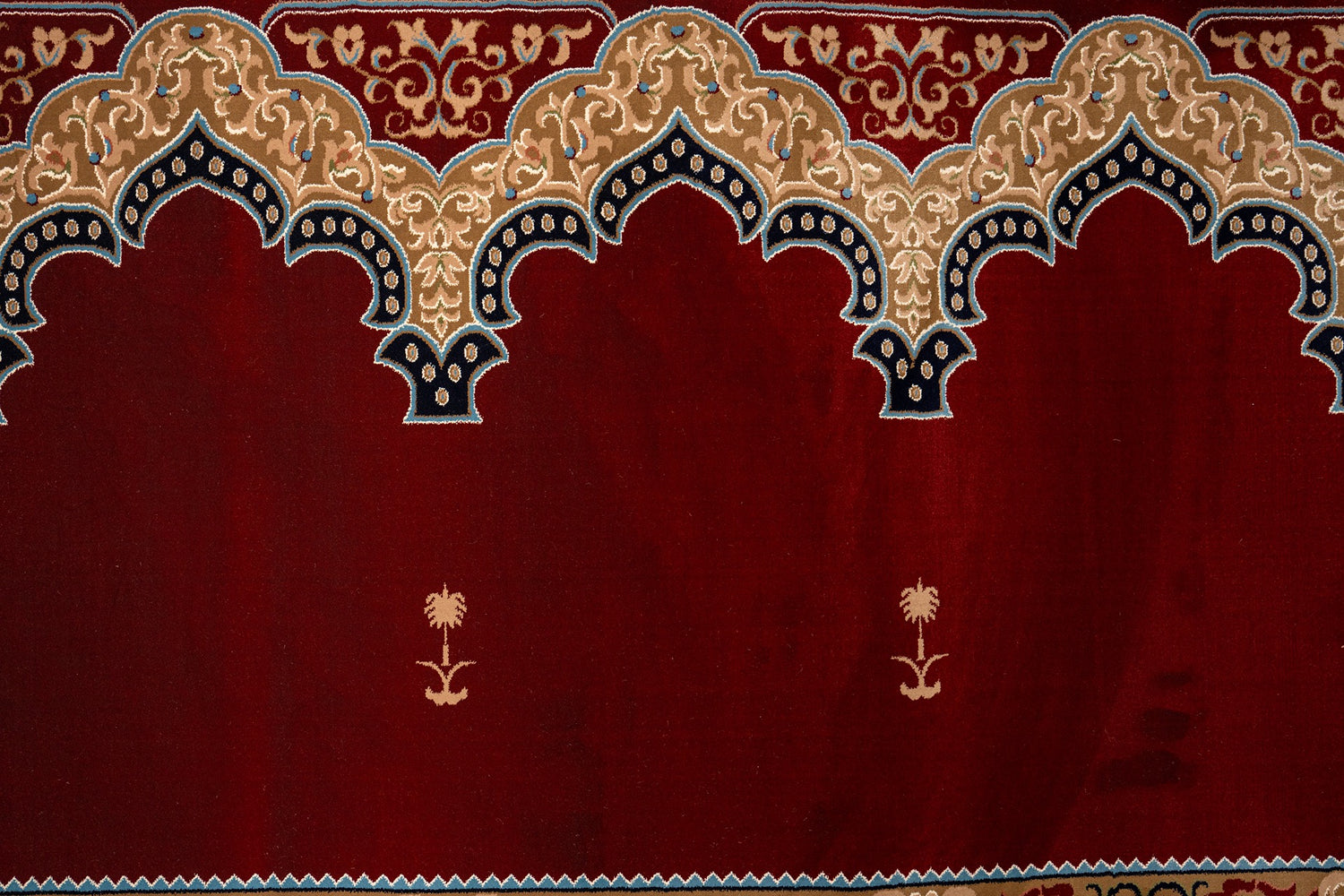
Divine | Prayer Rug
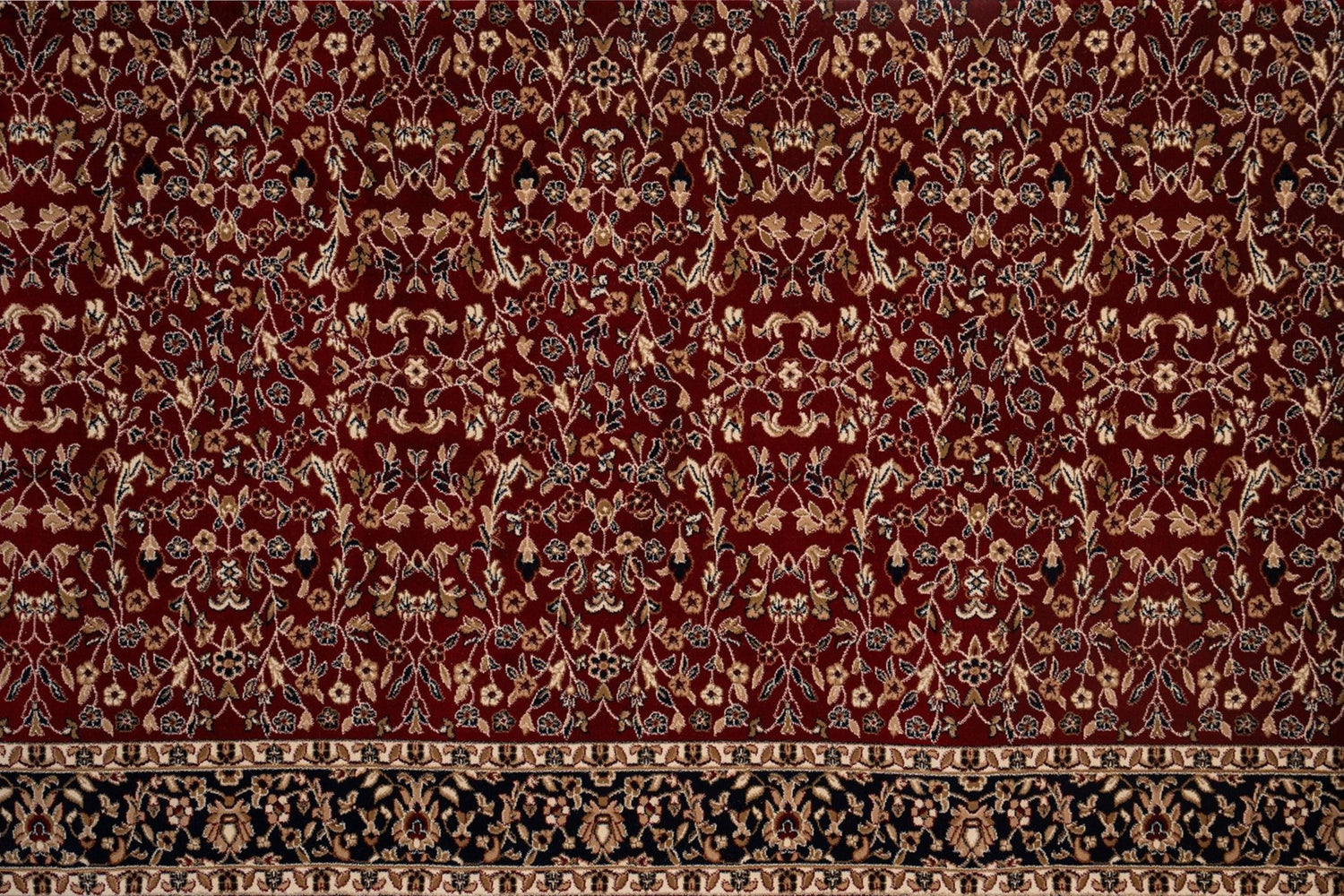
Graceful | Prayer Rug
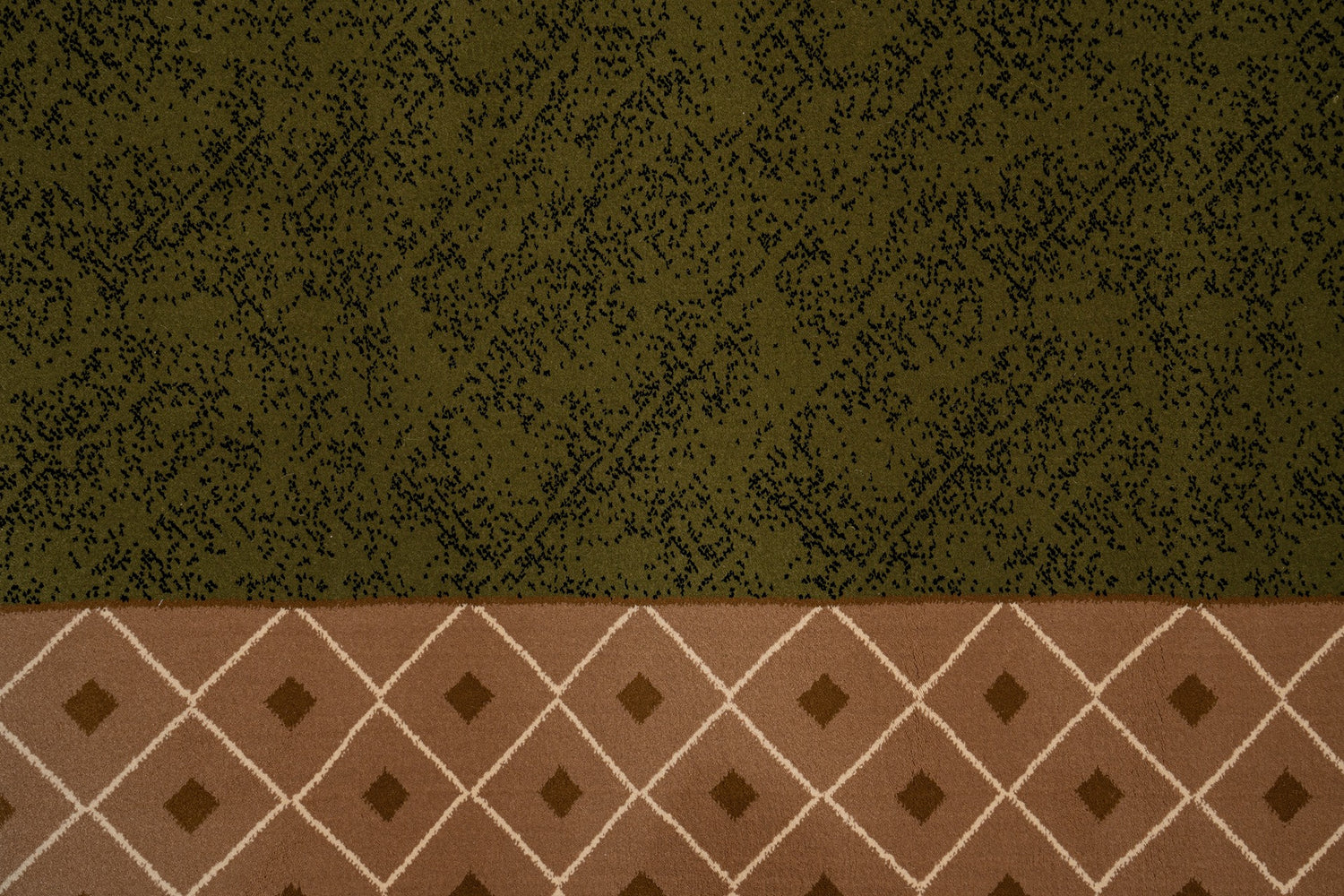
Sacred | Prayer Rug
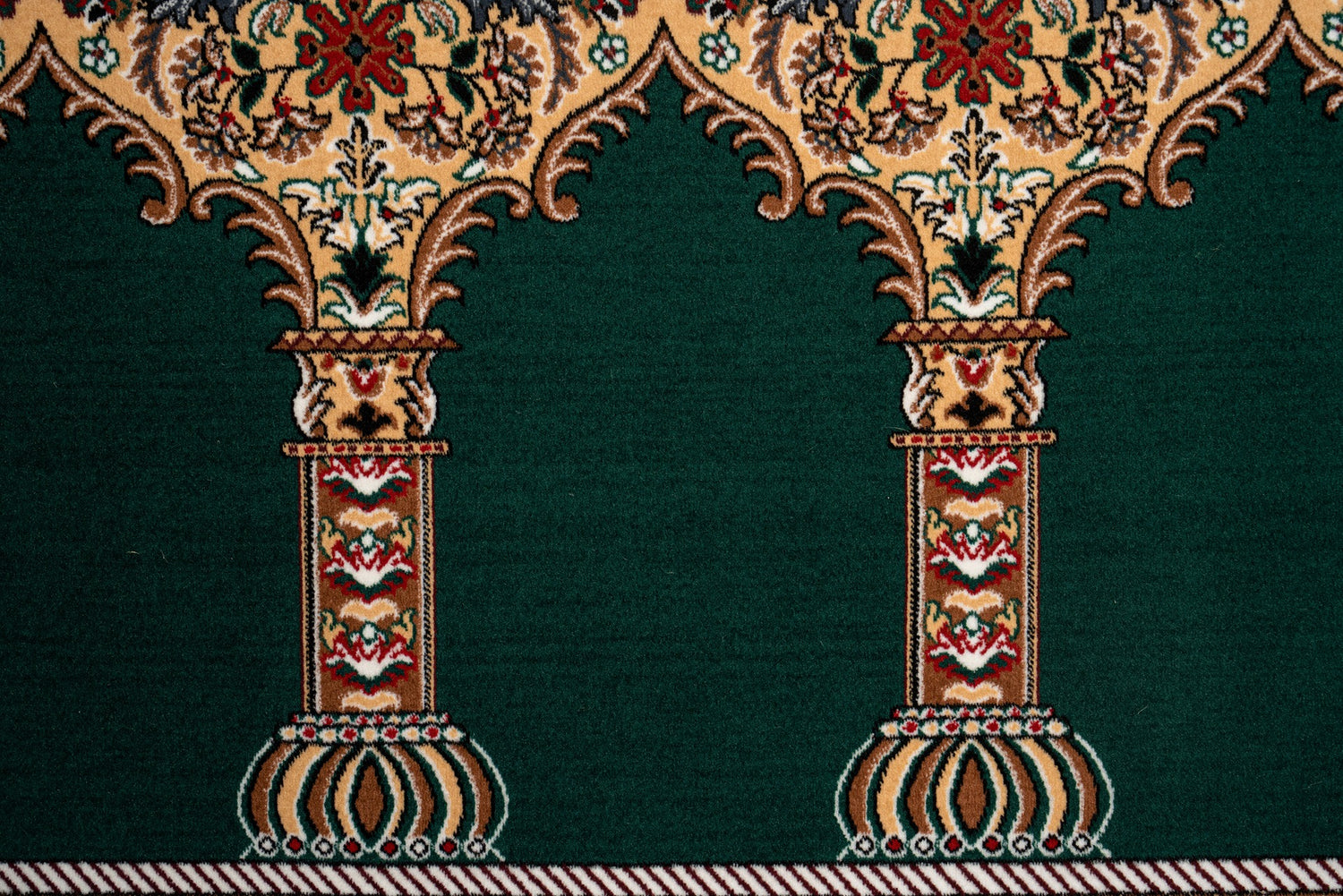
Serenity | Prayer Rug

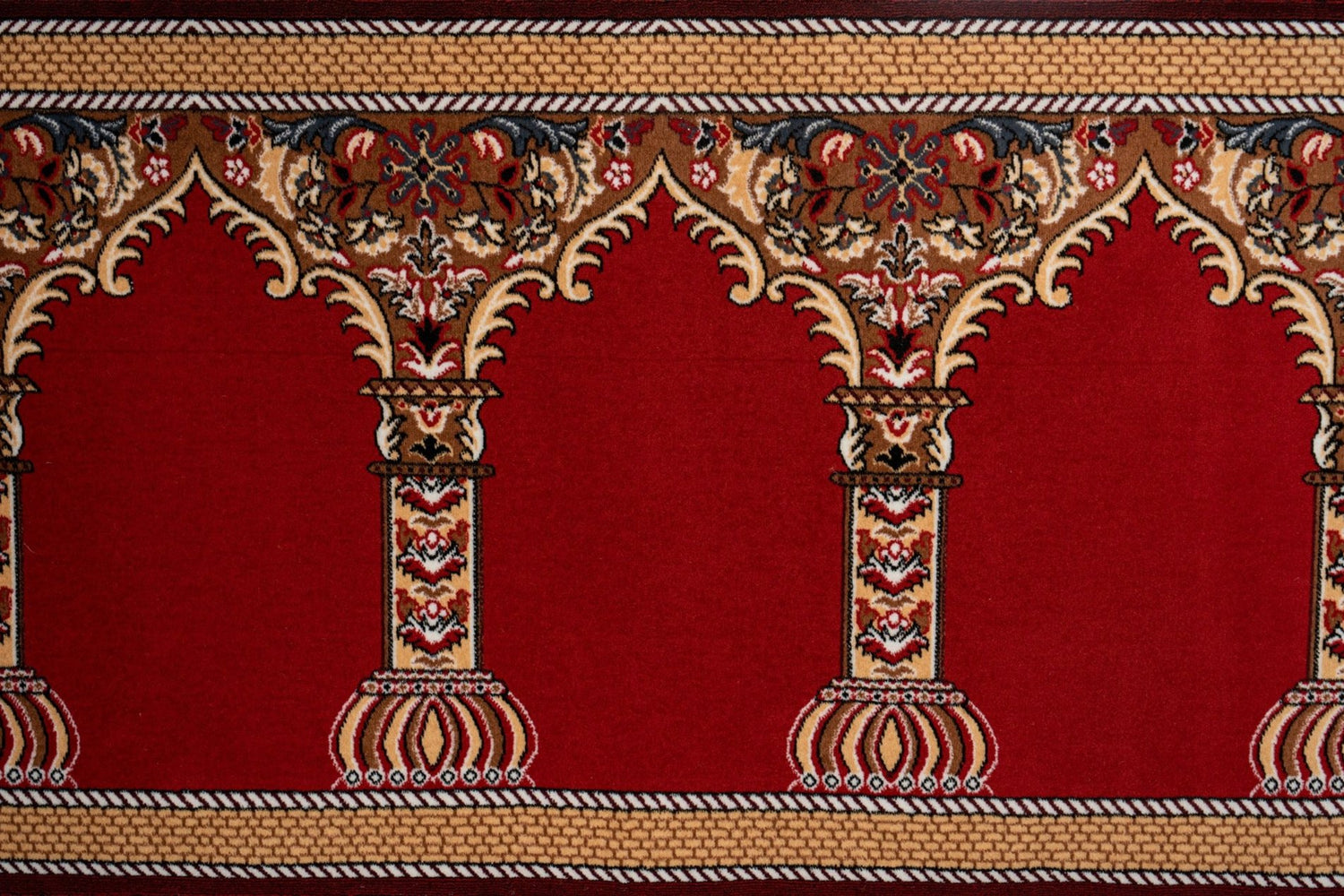
Tranquil | Prayer Rug
Choosing a Prayer Rug (Janamaz) That You Will Use Every Day
A janamaz is one of the few rugs in a home that is touched, knelt on and folded away daily. That changes what matters when you choose one. Unlike a room-size carpet that is mostly admired underfoot, a prayer rug is judged by how it feels under your knees and forehead, how cleanly it folds, and whether the design is correct for its purpose. The collection here is built around that everyday reality: comfortable pile, an honest mihrab, and materials that hold up to constant use.
What the Mihrab Arch Means
The defining feature of nearly every prayer rug is the mihrab, the arch-shaped niche woven at one end. It mirrors the prayer niche set into a mosque wall and gives the rug a clear top and bottom. In use, the point of the arch is laid facing the qibla, the direction of the Kaaba in Mecca, so the worshipper kneels with the niche ahead of them. Around the arch you will often find traditional motifs, a hanging lamp or lantern suggesting divine light, a tree-of-life, slender columns, or floral and geometric borders evoking paradise. In keeping with Islamic practice, well-made prayer rugs avoid images of people or animals. When you shop our designs, look for a mihrab that reads clearly and is centred, since the arch is the working heart of the rug, not just decoration.
Size, Pile and Comfort
A prayer rug is sized for one person to move from standing to full prostration. Common dimensions sit roughly between 70 x 110 cm and up to about 80 x 120 cm, giving room for the hands, knees and forehead without excess fabric to fold. Pile depth matters more here than on most rugs: a medium pile, often in the range of five to ten millimetres, cushions the knees and forehead during sujood while still folding flat for storage. Too thin and it is hard on the joints on a stone or tiled floor; too thick and it becomes bulky to carry and slow to dry. We are happy to let you kneel on a piece in the showroom, the only honest way to judge comfort.
Wool, Silk and How They Differ Here
Wool is the natural choice for a janamaz you will use daily. It is resilient, naturally springy under the knees, holds dye beautifully and resists everyday soiling better than most fibres, which is why a good wool prayer rug keeps its shape and looks well for many years. Silk is reserved for finer, more decorative pieces, prized for its sheen and the crispness it lends to an intricate mihrab and border; it is softer and more delicate, and is often chosen as a gift or for occasional rather than heavy daily use. Many of our prayer rugs combine the two, a wool field with silk highlighting the arch and motifs, so you get durability where it counts and lustre where it shows.
Hand-Knotted, Hand-Tufted, and How to Tell
If you want an heirloom janamaz, learn to read the back. On a genuine hand-knotted rug the reverse is soft and flexible, the individual knots are visible, and the pattern mirrors the front, with no separate cloth or latex backing glued on. Hand-tufted and machine-made rugs have their pile punched or woven through a foundation that is then held with adhesive and a separate sewn-on backing. The construction and knot type, not the design, is what tells you which you are holding. Hand-knotted pieces have no adhesive to break down and commonly last 50 to 100 years or more, while hand-tufted rugs typically last around 5 to 15 years as the latex backing ages, something worth knowing in Hyderabad's humidity. Knot density (KPSI) is one useful measure, but only one: a rug with half the knot count can still be the finer, more valuable piece. Wool quality, dyes, design, age and condition matter just as much.
Care, and an Honest Word on Value
Caring for a prayer rug is simple. Shake or gently vacuum it, air it occasionally, rotate the end you kneel on so wear spreads evenly, and blot spills promptly rather than rubbing. Fold it loosely rather than creasing the same line every time, and have it professionally washed every few years. A practical note on value: most rugs, prayer rugs included, do not appreciate, and only exceptional antique pieces reliably hold or grow their worth. Buy a janamaz for its beauty, comfort and the decades of daily use it will give, not as an investment.
See It, or Have It Made, in Hyderabad
You are welcome to handle these pieces at our showroom in Masab Tank, Vijaynagar Colony, where you can feel the pile and check the back yourself. If you would like a particular size, colour palette or mihrab style, we make custom hand-knotted prayer rugs to order, and deliver across India and worldwide.
See it in our Hyderabad showroom
Visit Ellora Carpets at Masab Tank, or commission a custom hand-knotted piece in your size, palette and design.
Commission a custom rug Visit the showroomFrequently asked questions
What is a janamaz, and is it the same as a prayer rug?
Yes. Janamaz is the Urdu and Persian word for a Muslim prayer rug, called sajjada in Arabic and namazlik in Turkish. It is a single-person mat used for the five daily prayers (namaz), traditionally woven with a directional mihrab arch at one end.
Which way should I lay the prayer rug?
Lay the rug so the point of the mihrab arch faces the qibla, the direction of the Kaaba in Mecca. From Hyderabad that is roughly west by north-west. You then kneel with the arch ahead of you, so the niche frames the direction of prayer.
What size is a typical prayer rug?
Most janamaz are sized for one person to move from standing to full prostration, commonly around 70 x 110 cm up to about 80 x 120 cm. That gives room for your hands, knees and forehead without extra fabric. If you need a larger or smaller size, we can make one to order.
Wool or silk for a prayer rug?
For daily use we usually recommend wool. It is resilient, springy under the knees, naturally resists soiling and keeps its shape for years. Silk is softer and more lustrous and suits finer, more decorative or gift pieces, but it is more delicate. Many of our rugs combine a wool field with silk highlights on the mihrab and motifs.
How thick should the pile be for comfort during sujood?
A medium pile, often around five to ten millimetres, cushions the knees and forehead during prostration while still folding flat for storage. Very thin rugs can be hard on the joints on tiled or stone floors, while very thick ones become bulky to carry and slow to dry. We invite you to kneel on a piece in our showroom to judge for yourself.
How can I tell if a prayer rug is genuinely hand-knotted?
Turn it over. On a hand-knotted rug the back is soft and flexible, the knots are visible, and the pattern mirrors the front, with no separate glued-on cloth or latex backing. Hand-tufted and machine-made rugs have a foundation held together with adhesive and a separate sewn-on backing. Construction and knot type, not the design, determine authenticity.
How long will a prayer rug last?
A hand-knotted wool prayer rug commonly lasts 50 to 100 years or more, since it has no adhesive to fail. Hand-tufted rugs typically last around 5 to 15 years as their latex backing ages, which is worth keeping in mind in Hyderabad's humidity. Daily folding and kneeling are gentle on a well-made knotted rug if you rotate and care for it.
Does a higher knot count (KPSI) mean a better prayer rug?
Not on its own. Knot density is one measure of fineness, but a rug with half the knot count can still be the finer and more valuable piece. Wool quality, the dyes, the design, the age and the condition matter just as much. We are happy to explain the trade-offs for any rug you are considering.
How do I clean and care for my janamaz?
Shake or gently vacuum it, air it now and then, and blot spills promptly instead of rubbing. Rotate the end you kneel on so wear spreads evenly, and fold it loosely rather than creasing the same line each time. Have it professionally washed every few years. We can advise on cleaning for your specific rug.
Why do prayer rugs avoid images of people and animals?
In keeping with Islamic practice, prayer rugs are decorated with the mihrab arch and with geometric, floral, lamp and tree-of-life motifs rather than figures of people or animals. The designs in this collection follow that convention, so the rug is appropriate for namaz.
What knot do Persian and Turkish prayer rugs use?
Persian (Iranian) rugs traditionally use the asymmetric, or Persian, knot, while Turkish and Anatolian rugs use the symmetric, or Turkish (Ghiordes), knot. Both produce beautiful, durable prayer rugs; the knot type is part of a rug's tradition and construction rather than a mark of quality on its own.
Can you make a custom prayer rug in my own colours or size?
Yes. We make bespoke hand-knotted prayer rugs to order in pure wool and silk, in the size, colour palette and mihrab style you prefer. Custom pieces take time to knot by hand, and we will give you a realistic timeline when you place the order at our Hyderabad showroom.
Is a prayer rug a good investment?
Buy a janamaz for its beauty, comfort and the decades of daily use it will give, not as an investment. Most rugs, prayer rugs included, do not appreciate in value, and only exceptional antique pieces reliably hold or grow their worth. A fine hand-knotted prayer rug is a meaningful, lasting possession rather than a financial asset.
Do you deliver prayer rugs outside Hyderabad?
Yes. You can visit our showroom in Masab Tank, Vijaynagar Colony, Hyderabad to see and handle the rugs, and we deliver prayer rugs across India and worldwide. Reach out if you would like help choosing a size or design before you order.